How to clear dust after a sandstorm in the UAE
Fine sand finds every gap. Here's the order to clean in after a sandstorm, the tools that actually work, and how to keep the next one out.
Anyone who has lived through a UAE sandstorm knows the feeling: the sky turns orange, the windows rattle, and a day later there is a fine beige film on every surface in the home, even with every window shut. Sandstorm dust is much finer than everyday dust. It drifts through the gaps around doors, windows and AC vents, and settles slowly over hours.
The good news is that it comes out with the right order and the right tools. The bad news is that wiping it the wrong way just moves it around, or grinds it into surfaces. Here’s how to do it properly.
1. Wait until the air has settled
It’s tempting to start cleaning the moment the wind drops, but fine dust keeps falling out of the air for several hours afterwards. If you clean too early, you’ll clean twice. Give it at least half a day after the storm has passed, keep windows and balcony doors shut, and leave the AC running so its filters can catch some of what is still in the air.
2. Start high, finish low
Dust always falls. Clean from the top of each room to the bottom so you never drop dust onto a surface you’ve already done:
- Ceiling fans, light fittings and the tops of curtain rails.
- AC grilles and vents (the outside of the grille, not inside the unit).
- Tops of wardrobes, shelves, door frames and picture frames.
- Worktops, tables and furniture.
- Skirting boards, then floors last.
3. Vacuum before you wipe
This is the step most people skip. Sandstorm dust is made of tiny, hard particles. If you wipe it with a wet cloth straight away, you make a gritty paste that smears across surfaces and can scratch glass, glossy cabinets and stainless steel.
Instead, use a vacuum with a soft brush attachment on everything you can: shelves, sills, frames, lampshades and upholstery. A vacuum with a HEPA filter is best, because it traps fine particles instead of blowing them back into the room.
4. Then damp-wipe with microfibre
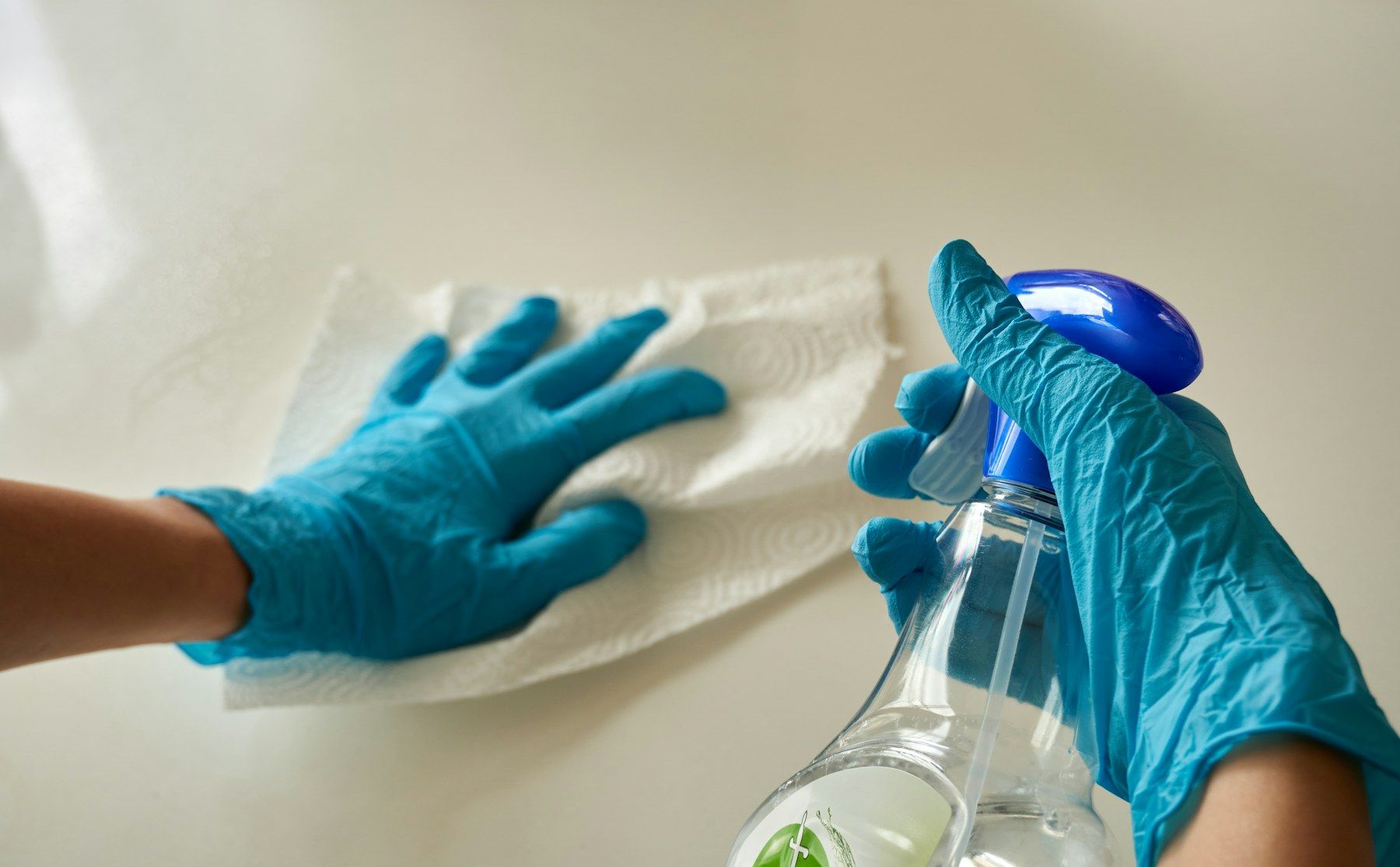
Once the loose dust is gone, wipe surfaces with a microfibre cloth that is damp, not wet. Microfibre grips fine dust rather than pushing it around. Rinse the cloth often in clean water, ideally with two buckets: one for rinsing and one with clean water. A dirty cloth just spreads the film again.
For glass and mirrors, finish with a dry microfibre cloth to avoid streaks.
5. Don’t forget the hidden places
Sand collects where you don’t see it until it’s too late:
- Window and balcony door tracks. Vacuum with a crevice tool, then wipe with a damp cloth wrapped around a flat tool. Grit left in tracks wears out the rollers.
- Behind and under furniture. Dust drifts along the floor and settles in corners.
- Inside cupboards near windows. Check the top shelves.
- Electronics. Use a dry cloth or a soft brush on screens and vents; never a wet cloth.
- Plants. Wipe leaves gently with a damp cloth so they can breathe again.
6. Floors: vacuum, then mop twice
Vacuum hard floors thoroughly first, including edges. Then mop with clean water and a mild floor cleaner. Change the water as soon as it looks cloudy. On tiled and marble floors a second mop with fresh water removes the haze that a single pass leaves behind.
7. Rugs and sofas
Fabric holds a surprising amount of fine sand. Vacuum rugs slowly, in both directions, with a powered brush head if you have one. For sofas, vacuum under and between cushions. If a light-coloured rug or sofa still looks grey after vacuuming, the dust has worked deep into the fibres; a hot-water extraction clean will lift it.
8. Change or clean your AC filters
After a big sandstorm your AC filters are probably full. Most split-unit filters slide out and can be rinsed with water, left to dry fully in the shade and refitted. Clean filters cool better and stop dust being blown back into the room. Duct cleaning is a separate job for an AC specialist.
Keeping the next one out
You can’t stop every grain, but you can reduce how much gets in:
- Check the seals on windows and balcony doors. Worn rubber seals are cheap to replace.
- Put a door draught excluder at the balcony door during the dust season.
- Keep windows closed when a dust warning is issued.
- Run the AC on recirculate during the storm.
- Leave shoes and bags at the door; sand travels in on soles.
When to call for help
A light film after a short storm is a one-hour job. After a heavy shamal, or if you have a large villa, light-coloured fabrics or lots of glass, it can easily take a full day. A deep clean covers everything above, including tracks, vents, fittings and behind furniture, and a carpet and rug clean takes care of the sand that vacuuming can’t reach. If you’d like to stay on top of it through the dusty months, regular home cleaning on a weekly or bi-weekly plan keeps the build-up down.